Home
» Technologie
»
Where to Study Cross-Border Digital Supply Chain Management: 7 Programs to Compare
Where to Study Cross-Border Digital Supply Chain Management: 7 Programs to Compare
The first question is not “Which university is best?” It is “What part of a cross-border digital supply chain do you actually want to manage?” A procurement analyst working with global suppliers needs a different skill mix from a logistics planner managing ports and warehouses, a digital-transformation consultant implementing analytics and enterprise systems, or a trade specialist focused on customs and compliance.
There is also an important naming issue. Few leading degrees are literally called “Cross-Border Digital Supply Chain Management.” Instead, the strongest fits usually sit under Supply Chain Management, Global Logistics, Global Operations, or Digital Supply Chain Management. The practical task is to compare the curriculum for four things: global network design, digital and analytical tools, cross-border trade exposure, and real-world application.
As of September 2026, several programs stand out because their official curricula or program descriptions make those elements unusually clear. The list below is not a universal ranking; it is a decision guide for different career goals.
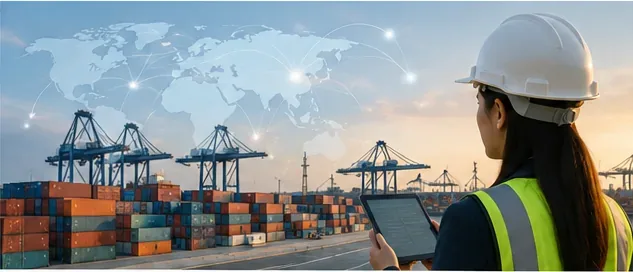
A logistics professional reviews operations at a container terminal, reflecting the mix of global trade, digital visibility, analytics, and physical logistics that defines cross-border supply chain management.
What should you decide before choosing a program?
Start by choosing your target role. “Supply chain” covers planning, sourcing, manufacturing, transportation, warehousing, trade compliance, technology implementation, risk, sustainability, and analytics. A good program for one path can be too broad or too technical for another.
If your target is...
Look for...
Be cautious if...
Digital supply chain transformation
Analytics, enterprise systems, AI/data courses, process redesign, digitalization projects
The program is mostly traditional logistics with little technology content
Cross-border logistics
Global logistics, distribution networks, ports, transport, international business, network design
The curriculum focuses almost entirely on domestic operations
Customs, trade compliance, regulation, documentation, tariff and border processes
You assume a general SCM degree covers detailed customs practice when it may not
Supply chain analytics
Optimization, forecasting, simulation, statistics, data analysis, decision modeling
You want quantitative work but the course is mainly managerial
Which programs are the strongest overall fits?
1. MIT Supply Chain Management Master’s — best for deep analytics and systems thinking
The MIT Supply Chain Management Master’s Program is a strong fit if you want rigorous analytical training, leadership development, and fast re-entry into the workforce. MIT offers a 10-month residential pathway and a blended pathway that combines the MITx MicroMasters curriculum with five months on campus.
The digital component is especially visible in the MITx MicroMasters curriculum, which includes Supply Chain Analytics, Design, Dynamics, and Supply Chain Technology and Systems. That combination is useful for people who want to understand not only physical flows but also the information and technology architecture behind them.
Choose MIT if: your goal is supply chain analytics, network design, technology-enabled operations, or consulting and you are comfortable with a quantitatively demanding environment.
Check carefully if: your main objective is customs law or detailed import/export compliance. MIT is fundamentally a supply chain program, not a customs-specialist degree.
2. NUS MSc in Supply Chain Management — best for Asia-facing global supply chains
The National University of Singapore MSc in Supply Chain Management is explicitly positioned around modern supply chains in Asia with a global context. NUS states that students gain exposure to logistics and supply chain issues in a digitalized global economy and can apply business analytics plus industrial systems engineering to industry problems.
That positioning is useful for students interested in Southeast Asia, regional manufacturing networks, e-commerce, international logistics, and analytics. Singapore's role as a major trade, port, and aviation hub makes the setting especially relevant, although the location itself should not be treated as proof that a particular internship or job will be available.
Choose NUS if: you want a multidisciplinary business-and-engineering view of supply chains in Asia with explicit attention to digitalization and analytics.
Check carefully if: you need a very narrow specialization in customs or a specific enterprise platform. Verify the current module list for your intake before applying.
3. POLIMI GSoM International Master in Digital Supply Chain Management — best if “digital” must be central, not optional
The school says the curriculum gives special attention to Supply Chain, Big Data and Analytics, Technology, Innovation, and Sustainability. It also includes company interaction and an international study tour. That makes it a strong match for early-career professionals who want digital transformation to be a central part of the degree rather than one elective among many.
Choose POLIMI if: you want to work in supply chain digitalization, procurement transformation, analytics, or consulting and prefer a practice-heavy one-year format.
Check carefully if: you already have substantial work experience. POLIMI says the program is designed mainly for recent graduates, ideally with no more than three years of experience.
4. KLU Global Logistics & Supply Chain Management — best for global logistics depth and international exposure
The program includes Global Logistics Strategies, Supply Chain Analytics, Sustainability in Supply Chains, and International Business & Leadership. KLU's Saigon program adds an especially interesting cross-border angle: it is taught in English in Ho Chi Minh City, combines KLU expertise with regional input from HCMUT, includes digitalization in the curriculum, and offers an optional semester at KLU's Hamburg campus.
A recent update matters here. KLU opened its Saigon campus in 2025, and in September 2026 reported that the program had grown to more than 60 students there. That means this is no longer only a planned international expansion; it is an operating program.
Choose KLU if: you want logistics to be the core discipline and value international business, analytics, digitalization, and direct exposure to major logistics regions.
Check carefully if: you want a heavily technical data-science degree. KLU includes analytics and digital transformation, but the degree remains centered on logistics and supply chain management.
5. Rotterdam School of Management MSc Supply Chain Management — best for ports, global networks, and applied trade context
The Rotterdam School of Management MSc in Supply Chain Management is a one-year, 60-ECTS program taught in English. Its curriculum includes Supply Chain Decision Analytics, Distribution Networks, Purchasing and Supply Management, Facility Logistics Management, and Sustainable Supply Chains. Electives listed for the program include Ports in Global Networks and Introduction to Commodity Trade & Supply Networks.
RSM stelt verder dat haar expertise op het gebied van supply chain management digitalisering en analytics omvat, en benadrukt de nabijheid van de haven van Rotterdam. Dit is een bijzonder nuttige combinatie als u onder "grensoverschrijdend" internationale fysieke stromen, havens, distributie, inkoop en netwerkontwerp verstaat, in plaats van alleen softwaretransformatie.
Kies RSM als: je een compacte Europese masteropleiding wilt met een sterke focus op logistiek, inkoop, data-analyse en een wereldwijd netwerk.
Controleer zorgvuldig of u een pure opleiding in digitale supply chain management nodig hebt. Technologie maakt weliswaar deel uit van het programma, maar de titel en structuur van de opleiding blijven breder en omvatten supply chain management.
6. HKUST MSc in Global Operations — het beste voor wereldwijde bedrijfsvoering en data-analyse in Azië
De MSc Global Operations van HKUST is een eenjarig voltijdprogramma voor studenten die geïnteresseerd zijn in het managen van operationele processen op wereldwijde schaal. De HKUST-catalogus voor 2026/27 vermeldt Global Supply Chain Management en Business Modeling and Optimization als verplichte vakken, terwijl het programma ook keuzevakken aanbiedt zoals Big Data Analytics, ERP en Enterprise Systems Management, Logistiek Management en Simulatie voor Risico- en Operationele Analyse.
De programmadirecteur van HKUST omschrijft het huidige curriculum als een programma dat zich richt op duurzaam supply chain-ontwerp, bedrijfsanalyse, digitale innovatie en risicobeheersing. Deze combinatie kan aantrekkelijk zijn voor studenten die een bredere operationele opleiding willen volgen in plaats van een opleiding die zich specifiek op logistiek richt.
Kies HKUST als: je geïnteresseerd bent in internationale bedrijfsvoering, supply chain strategie, modellering en digitale zakelijke ervaring in een Aziatische business school-omgeving.
Controleer zorgvuldig of je een vast aantal specifieke keuzevakken nodig hebt. HKUST merkt op dat de beschikbaarheid van keuzevakken kan variëren, dus controleer het actuele rooster voor jouw instroomperiode.
7. Warwick MSc Supply Chain and Logistics Management — het beste voor digitaal gestuurde logistiek met praktijkgericht onderwijs.
De masteropleiding Supply Chain and Logistics Management van de Universiteit van Warwick is een eenjarig voltijdprogramma. Warwick omschrijft de opleiding als een voorbereiding op het bouwen van duurzame, veerkrachtige en digitaal gestuurde logistieke oplossingen voor internationale handel, e-commerce en de maakindustrie.
De onderwijsmethode omvat simulaties, groepswerk, casestudies, praktische oefeningen en input vanuit het bedrijfsleven. Dat kan waardevol zijn als je het beste leert door modellen toe te passen in plaats van de theorie van de toeleveringsketen geïsoleerd te bestuderen.
Kies voor Warwick als: je een brede masteropleiding in supply chain en logistiek wilt volgen die expliciet aandacht besteedt aan digitale transformatie en internationale zakelijke contexten.
Controleer zorgvuldig of uw hoofddoel geavanceerd programmeren, AI-engineering of datawetenschap is. "Digitaal georiënteerd" betekent niet automatisch dat het programma gelijkwaardig is aan een technische analyseopleiding.
Heeft u een programma nodig met 'grensoverschrijdend' in de titel?
Nee. Waar het om gaat, is of de cursus de processen behandelt die daadwerkelijk grenzen overschrijden: inkoop, netwerkontwerp, internationale logistiek, wereldwijde activiteiten, havens, distributie, leveranciersrisico's, datatransparantie en, waar relevant, douane- en handelsregelgeving.
Het keuzevak 'Ports in Global Networks' van RSM is bijvoorbeeld zeer relevant voor grensoverschrijdende fysieke handel, ook al staat 'grensoverschrijdend' niet in de titel van de opleiding. NUS plaatst haar opleiding Supply Chain Management expliciet in een mondiale context rond Azië. KLU combineert wereldwijde logistiek met internationale bedrijfskunde. HKUST gebruikt wereldwijde bedrijfsvoering als overkoepelend thema. POLIMI stelt digitalisering centraal.
Een titel is een zwak signaal. De modulelijst is sterker bewijs.
Hoeveel digitale content is genoeg?
Dat hangt af van de functie die je ambieert. Een supply chain manager moet voldoende digitale vaardigheden hebben om systemen, analyses, automatisering en datakwaliteit te beoordelen. Een data scientist in de supply chain heeft meer kennis van statistiek, programmeren, optimalisatie en machine learning nodig. Een transformatieconsultant heeft mogelijk zowel technologisch inzicht als kennis van procesherontwerp nodig.
Voordat u een aanvraag indient, moet u zoeken naar bewijs van ten minste drie van de volgende punten:
Supply chain-analyse of beslissingsanalyse
Optimalisatie en modellering
ERP- of bedrijfssystemen
Cursussen over digitale toeleveringsketens of technologie en systemen
Simulatie
Voorspelling
Big data of AI-toepassingen
Voer concrete bedrijfsprojecten uit met behulp van echte operationele gegevens.
MIT, POLIMI, NUS en HKUST benadrukken het digitale/analytische aspect nadrukkelijk in hun officiële beschrijvingen. RSM, KLU en Warwick integreren het in bredere curricula voor logistiek en supply chain management.
Wat als douane- en handelsregelgeving uw prioriteit is?
Ga er niet van uit dat een algemene masteropleiding in supply chain management gedetailleerde onderwerpen behandelt zoals douaneaangiften, tariefclassificatie, oorsprongsregels, sancties, exportcontroles of landspecifieke grensprocedures. Deze onderwerpen ontbreken mogelijk of worden slechts oppervlakkig behandeld.
Als je specifiek een carrière in de douane of compliance ambieert, vraag dan het programma om het actuele curriculum en zoek naar modules die specifiek over douane, internationaal handelsrecht, handelscompliance of grensbeheer gaan. RSM bijvoorbeeld, biedt binnen de afdeling Supply Chain Management aparte executive education aan op het gebied van douane en supply chain compliance; deze scheiding is een nuttige herinnering dat expertise op het gebied van douane specifieke training kan vereisen die verder gaat dan een standaard masteropleiding.
Is een online route betrouwbaar?
Ja, als je doel is om je vaardigheden te ontwikkelen en flexibeler te zijn. De MITx MicroMasters in Supply Chain Management van MIT is volledig online en bestaat uit vijf vakken op masterniveau plus een uitgebreid examen. Het programma behandelt analyses, basisprincipes, ontwerp, dynamiek en technologie en systemen.
Het is vooral handig als je al werkt of je interesse wilt peilen voordat je je vastlegt op een voltijdstudie. Het gecombineerde mastertraject van MIT laat ook zien hoe een online diploma kan leiden tot een residentieel masterprogramma. Het nadeel is dat een online traject mogelijk minder dagelijkse contacten biedt met lokale werkgevers, wervingsdagen op de campus, havens, fabrieken en netwerken in persoon.
Welk programma moet je kiezen?
Prioriteit
Programma's om eerst te onderzoeken
Waarom
Digitale transformatie
POLIMI, MIT, NUS
Digitalisering, technologische systemen, analyses en procestransformatie komen expliciet aan bod.
Azië en grensoverschrijdende regionale netwerken
NUS, HKUST, KLU Saigon
Sterke Aziatische context met een focus op wereldwijde activiteiten of logistiek.
Europese logistiek en havens
RSM, KLU Hamburg
Wereldwijde logistiek, distributie, havens, inkoop en nabijheid van de industrie.
Kwantitatieve analyses
MIT, HKUST, NUS, RSM
Optimalisatie, beslissingsanalyse, modellering en datagestuurde bedrijfsvoering staan centraal.
Inkoop en sourcing
POLIMI, RSM, KLU
Inkoop, sourcing, onderhandeling en logistieke strategie zijn geïntegreerd in het curriculum.
Flexibel online leren
MITx MicroMasters
Online studietraject op masterniveau zonder onmiddellijke verhuizing.
Wat moet je controleren voordat je een aanvraag indient?
Programmapagina's worden regelmatig bijgewerkt. Keuzevakken kunnen rouleren, collegegeld kan stijgen, de timing van visa kan veranderen en bedrijfsprojecten kunnen per jaar verschillen. Controleer vóór het aanmelden de actuele toelatingspagina en beantwoord vijf vragen:
Welke digitale en analysecursussen zijn verplicht en welke niet-optioneel?
Wordt er in het programma aandacht besteed aan wereldwijde logistiek en inkoop, of vooral aan binnenlandse activiteiten?
Is er sprake van een project, stage, studiereis, uitwisseling of een afstudeeropdracht in opdracht van een bedrijf?
Wordt in de cursus aandacht besteed aan handelsregelgeving, indien dat belangrijk is voor uw functie?
Sluit het kwantitatieve niveau van het programma aan bij jouw achtergrond en carrièreambities?
De beste keuze is de opleiding waarvan het curriculum aansluit bij je beoogde baan. Als je je wilt specialiseren in digitale transformatie van de toeleveringsketen, geef dan prioriteit aan technologie, analyses en procesherontwerp. Als je je wilt verdiepen in grensoverschrijdende logistiek, geef dan prioriteit aan wereldwijde netwerken, transport, havens, inkoop en internationale handel. Als je expertise op het gebied van douane wilt, controleer dan of douane daadwerkelijk wordt onderwezen in plaats van ervan uit te gaan dat dit onderdeel uitmaakt van een algemene opleiding in supply chain management.